- Solutions Solutions Explore >
- Clients & Partners Clients & Partners Explore >
-
Insights
Insights
Explore >
Up to top (this text gets replaced by JS) Up a level (this text gets replaced by JS)
- Support
- FAQs
- Klea Login (Customers)
- Orchestrating Global Compliance with AI: Lessons from the Field
- Download our whitepaper now!
- Company Company Explore >
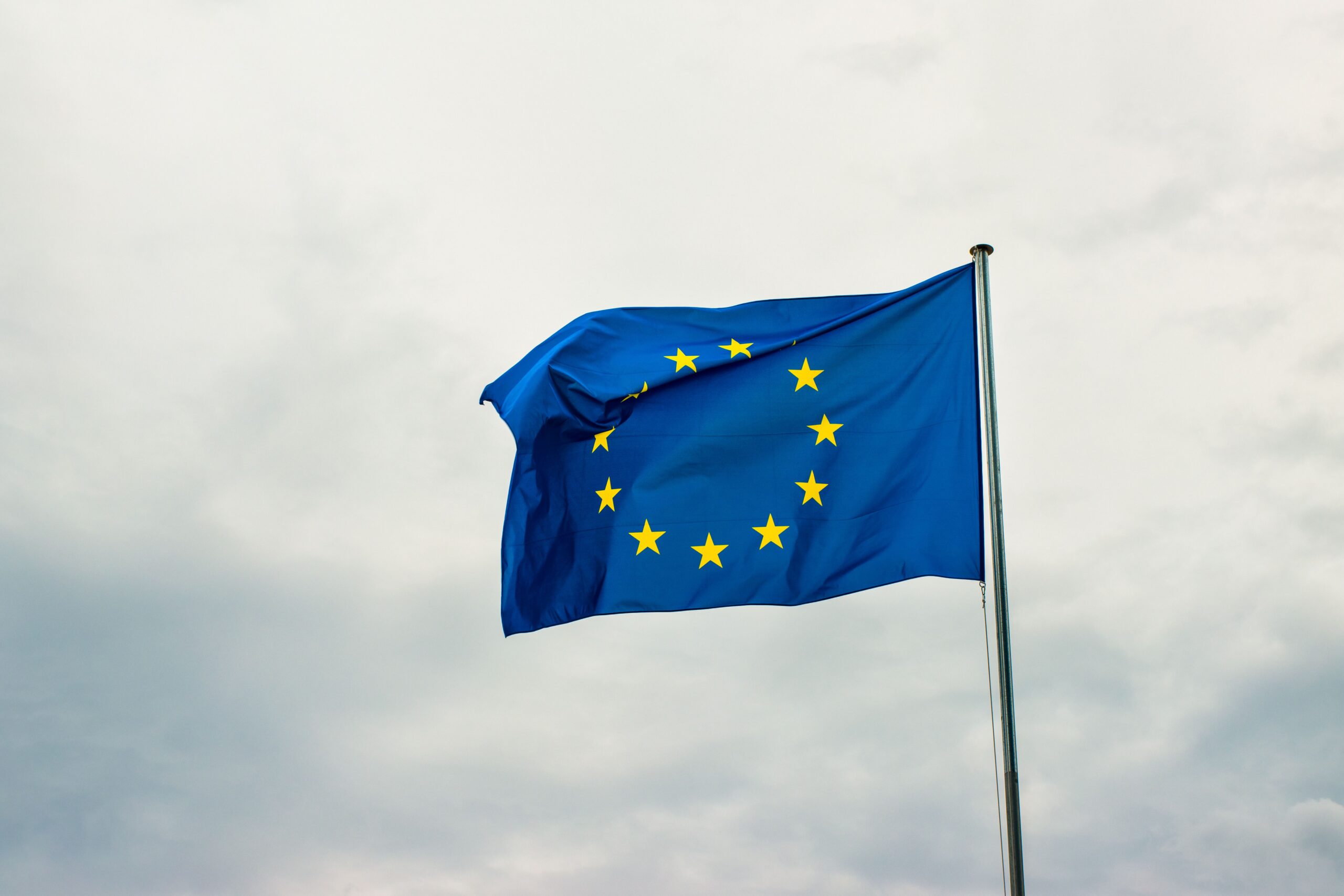
Picture forming a company anywhere in the EU within 48 hours, for no more than €100, without ever visiting a notary. That’s the promise behind the new EU Inc. company form, set out in a European Commission proposal published on 18 March 2026. Brussels isn’t replacing national company law. Instead, it proposes an optional 28th regime that sits alongside the 27 existing systems. If Parliament and Council agree, EU Inc. could apply from 2027 or 2028. Here’s what legal and compliance teams should understand now, while the proposal still has a long way to travel.
Why Did Brussels Decide It Needed a 28th Company Form?
The EU currently runs 27 separate national company law systems. Each has its own incorporation rules, templates and quirks. For founders operating across borders, that patchwork creates real friction: extra legal costs, duplicated paperwork and uncertainty about which rules actually apply.
The Commission didn’t invent this idea in a vacuum. Both the Draghi report on competitiveness and the Letta report on the single market flagged this fragmentation as a genuine barrier to EU growth. The European Council then asked the Commission, twice in 2025, to propose an optional company law regime without delay. The European Parliament followed with its own resolution in January 2026, pushing for the same thing.
EU Inc. is the Commission’s answer: a company form that sits alongside domestic ones, not replacing them, giving founders a genuine European option for the first time.
What Exactly Is the EU Inc. Company Form?
EU Inc. is a harmonised, optional limited liability company form, available to businesses of any size, regardless of where they’re incorporated or headquartered. Any founder anywhere in the EU can use it. So can existing companies that convert into it.
Crucially, EU Inc. won’t replace your domestic private limited company or its national equivalent. It sits alongside them as a voluntary alternative, hence the “28th regime” label: 27 Member States, plus one new EU-wide option.
A company can form an EU Inc. from scratch, through a domestic merger or division, or via a cross-border conversion, merger or division under existing EU company law rules. Every EU Inc. must:
- Register its office in a Member State of its founders’ choosing.
- Add the suffix “EU Inc.” to its company name, used unaltered across the Union.
- Be recognised automatically in every other Member State once registered.
Its registered office and its central administration don’t even need to sit in the same country. That flexibility alone marks a departure from several national regimes.
How Fast, and How Cheap, Would Incorporation Really Be?
This is where EU Inc. gets genuinely interesting for anyone who has sat through a slow national incorporation process. Using standardised EU templates through a new digital EU central interface, founders could complete a “fast-track” registration within 48 hours, capped at €100, including any preventive administrative or notarial check.
No notary appointment. No minimum share capital, beyond a token amount some drafts put at €0 or €1. Everything, including payment, happens online.
The interface also applies a once-only principle. Once a founder submits the company’s details, the business register automatically forwards them to the tax authority, the social security authority and the beneficial ownership register. In practice, that means:
- No re-entering the same information across four different portals.
- Automatic issuance of a tax identification number and VAT number, in most cases.
- One digital identifier, the European Unique Identifier (EUID), that follows the company everywhere.
For a group setting up a subsidiary elsewhere in the EU, that identifier also lets the new register pull the parent’s details from the existing EU-wide system, rather than making the group resubmit documents it has already filed once.
What New Concepts Should Compliance Teams Get Familiar With?
A few defined terms are worth flagging early, since they’ll shape how EU Inc. companies are actually governed day to day.
Shares are always dematerialised and recorded in a digital share register, which the company itself maintains. Ownership changes take legal effect only once the company logs them there, and transfers can happen entirely online, without a broker or notary in the loop, unless the articles of association say otherwise.
Directors benefit from a business judgment rule: it protects good-faith decisions made with reasonable care from liability, even when they turn out badly later. That’s a meaningful shift for jurisdictions with stricter director liability regimes.
For talent retention, EU Inc. companies can run an EU employee stock option plan (EU-ESO). The scheme defers tax on the resulting income until the employee actually disposes of the shares, avoiding a dry tax charge on paper gains.
Cross-border paperwork also gets lighter. An EU Company Certificate and a digital EU power of attorney let an EU Inc. prove its existence and authorise representatives abroad, without an apostille or other legalisation step.
Is the EU Inc. Company Form Already Law?
No, and this is the point worth underlining to anyone asking. The European Commission published this as a proposal, not a final Regulation. It still needs to pass through the European Parliament and the Council under the ordinary legislative procedure, and both could amend it substantially.
That said, the political appetite looks real. There’s strong political will to finalise the Regulation by the end of 2026, with actual application expected from 2027 or 2028. Nothing here is locked in, and the final text could easily shift on details like minimum capital or director residency requirements.
So no client currently needs to rush anywhere. Monitoring the file, however, is genuinely worth the effort.
What Should Legal and Compliance Teams Do Now?
Given the proposal stage, there’s no obligation to act today. Still, a few things are worth doing while the text moves through Parliament and Council.
- Flag EU Inc. to clients actively planning a multi-jurisdiction expansion or a group restructuring, so it’s on their radar before decisions get locked in.
- Note that employee participation rules stay governed by the Member State of the registered office. EU Inc. doesn’t override existing worker protections.
- Remember that adopting EU Inc. will always be optional. Existing entities keep full freedom: nothing forces them to convert, and current structures remain fully valid.
- Track the legislative timeline, particularly any changes to the minimum capital figure or the director residency requirement, both of which attracted debate during consultation.
If your organisation runs entities across several Member States already, this is a good moment to map where a future EU Inc. conversion might actually simplify things, and where it wouldn’t change much at all.
What’s next?
Managing a EU Inc. formation process requires detailed planning and full legal awareness. For more insights into processes in other jurisdictions, explore our article: Commercial Register Act Slovakia: 2026 Company Changes.
Klea transforms entity management by offering centralised governance, automated compliance, and secure collaboration tools. For this reason, businesses looking for an efficient, scalable solution can take the following actions:
- Request a Demo – See Klea in action for your organisation.
- Start a Trial – Experience first-hand how automation reduces workload and improves efficiency.
- Talk to Our Experts – Get tailored recommendations based on your entity management needs.
Company secretarial software solutions play a crucial role in modern businesses that require structured governance, consistent compliance, and accurate legal entity management. With Klea, organisations can ensure corporate governance remains efficient, transparent, and risk-free.
Legal Disclaimer
The information provided on Klea’s website is made available “as is” for informational purposes only. Klea does not provide legal, tax, or financial advice and is not responsible for any actions taken or not taken based on the content found on this website. In no event shall Klea be liable for any loss or damages arising from reliance on the information contained herein.
For specific legal or compliance support tailored to your business needs, please contact Klea directly. Our team provides personalised guidance and expert solutions. Any reliance on general content without direct consultation does not establish any legal responsibility or liability on Klea’s part.