- Solutions Solutions Explore >
- Clients & Partners Clients & Partners Explore >
-
Insights
Insights
Explore >
Up to top (this text gets replaced by JS) Up a level (this text gets replaced by JS)
- Support
- FAQs
- Klea Login (Customers)
- Orchestrating Global Compliance with AI: Lessons from the Field
- Download our whitepaper now!
- Company Company Explore >
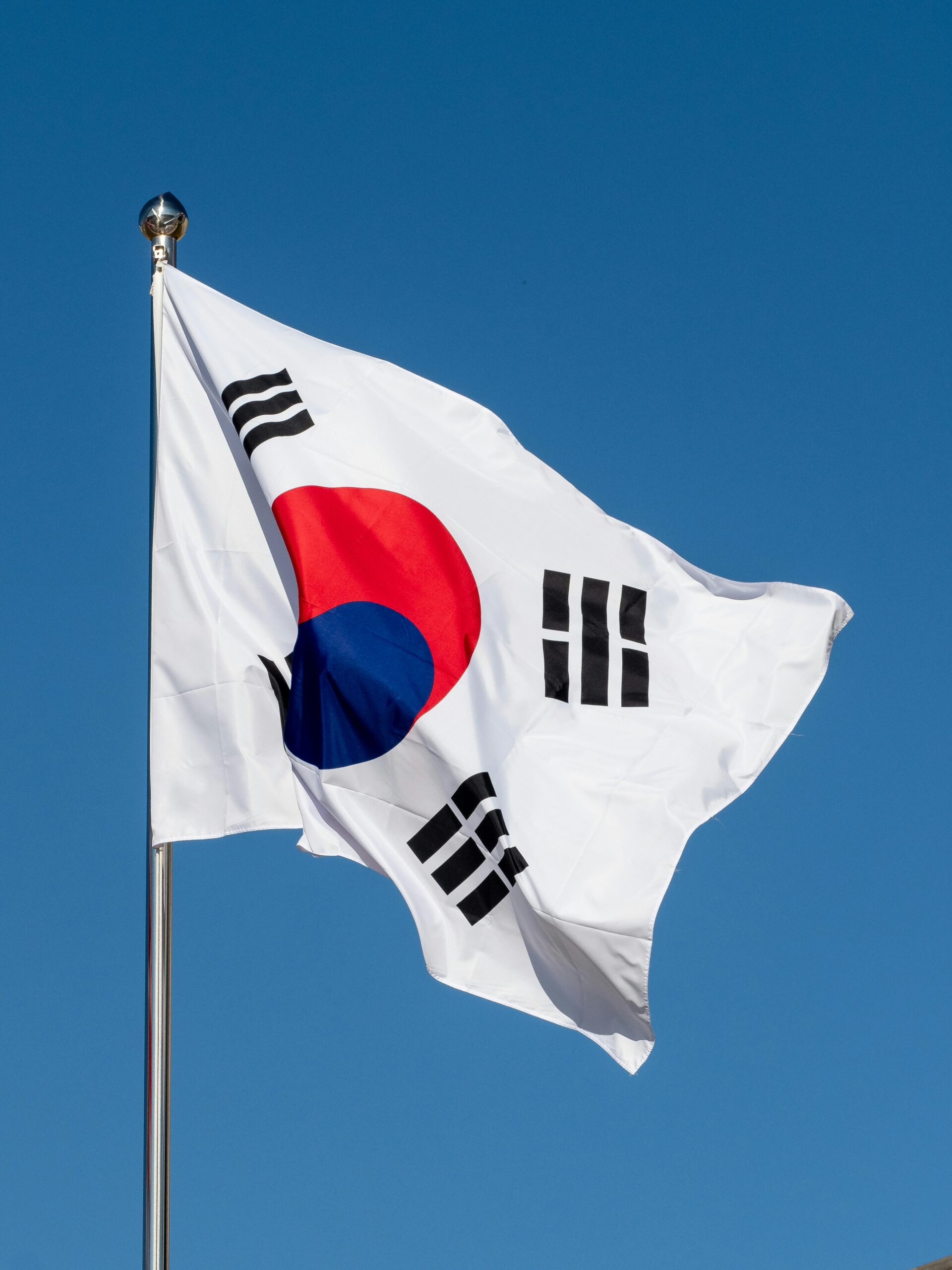
South Korea’s extension of the 3% voting rights cap for audit committee appointments marks one of the most significant corporate governance reforms in recent Korean history. If your organisation has subsidiaries or investments in Korea, this isn’t just regulatory housekeeping. It’s a fundamental shift in how boards will be constituted from 23 July 2026 onwards.
What’s the 3% rule?
Think of it as a speed bump for dominant shareholders. Under Korean law, large listed companies with total assets of KRW 2 trillion or more (roughly USD 1.47 billion) must establish an audit committee. When electing members to this committee, the largest shareholder and related parties have their combined voting power capped at 3%.
Here’s the thing. Before the 2025 amendments, this aggregated cap only applied when electing audit committee members who weren’t classified as outside directors. If the nominee was an outside director, the rules were more relaxed. Each related party could vote independently up to 3% of their own holdings, with no aggregation required.
You can probably see the loophole. Controlling shareholders could maintain significant influence over audit committee composition by filling seats with outside directors, effectively sidestepping the stricter aggregated cap.
What’s actually changed?
The Korean Commercial Code amendment, passed by the National Assembly on 3 July 2025 and promulgated on 22 July 2025, eliminates this inconsistency. From 23 July 2026, the aggregated 3% rule applies uniformly to all audit committee member elections, whether the candidate is an independent director or not.
Before the amendment:
- Electing a non-outside director to the audit committee: aggregated 3% cap applied
- Electing an outside director to the audit committee: individual 3% caps, no aggregation
After 23 July 2026:
- Electing any audit committee member: aggregated 3% cap applies across the board
This closes what many governance advocates considered a significant gap in shareholder protection.
But wait, there’s more: the 2nd Amendment
Just when companies thought they had a year to prepare, a further set of amendments passed on 25 August 2025. The Democratic Party pushed through what’s being called the “stronger” or “second amendment” to the Commercial Code, adding two substantial requirements for large public companies.
Mandatory cumulative voting is the first big change. Previously, companies could opt out of cumulative voting by including exclusion clauses in their articles of incorporation, and most did exactly that. Statistics from late 2024 showed that among 334 public companies with total assets of KRW 5 trillion or more, only 13 hadn’t excluded cumulative voting, and just one company actually used it. The 2nd Amendment eliminates this opt-out. Large public companies must now implement cumulative voting, effective from the first shareholders’ meeting convened to elect directors after promulgation in September 2025.
What does cumulative voting mean in practice? If a shareholder owns 100 shares and there are five director positions up for election, they get 500 votes to distribute however they like. They could spread them evenly or pile all 500 onto a single candidate. This makes it significantly easier for minority shareholders or activist investors to secure board representation.
Expanded separate election requirements form the second major change. The 1st Amendment already required that at least one director serving on the audit committee be elected through a separate process from other board members, with the aggregated 3% cap applied from the director election stage. The 2nd Amendment increases this to at least two directors, effective approximately September 2026 (one year after promulgation).
Combined with the extended 3% rule, this means at least two audit committee members will likely be elected without the controlling shareholder’s support.
Why does this matter for multinational companies?
If you’re managing Korean subsidiaries or holding investments in Korean listed companies, the practical implications are substantial. Controlling shareholders, including chaebol founding families, will find it considerably harder to dominate both board and audit committee elections.
For minority shareholders and institutional investors, this creates real opportunities. The uniform 3% cap, combined with mandatory cumulative voting and expanded separate elections, means that second and third largest shareholders, along with activist investors and institutional holders, gain meaningful influence in determining who sits on the board and audit committee.
The Korea Chamber of Commerce and Industry surveyed 300 listed companies in July 2025 and found that 76.7% believed these revisions could harm corporate growth. Some 74% thought implementing cumulative voting alongside the expanded separate election requirements could threaten management control. Whether you view that as a warning or a feature depends rather heavily on which side of the shareholder register you sit.
Which companies are affected?
The aggregated 3% rule and the 2nd Amendment requirements apply to large-scale public companies, defined as those with total assets of KRW 2 trillion or more. These companies are already required to establish audit committees comprising at least three directors, with two-thirds being independent directors (the terminology change from “outside” to “independent” directors was also part of the July 2025 amendments).
Smaller listed companies may opt for statutory auditors instead, but any company choosing to establish an audit committee should consider how these voting dynamics affect board composition planning.
Preparing for the changes: what should you do now?
With multiple effective dates to track, companies need a clear compliance roadmap.
Immediate priorities (by early 2026):
Review your articles of incorporation. If your Korean subsidiary has clauses excluding cumulative voting, these need amending before your next shareholders’ meeting that elects directors. The 2nd Amendment makes such exclusions unenforceable for large public companies.
Model your voting scenarios. Run simulations of director and audit committee elections under both cumulative voting and the aggregated 3% cap. Identify potential vulnerabilities in vote alignment and consider how minority coalitions might affect outcomes.
By July 2026:
Prepare for the extended 3% rule. Any general meeting convened after 23 July 2026 to elect audit committee members will be subject to the uniform aggregated cap, regardless of whether candidates are independent directors.
By September 2026:
Implement expanded separate elections. At least two directors serving as audit committee members must be elected through the separate election process, with the aggregated 3% rule applied from the director election stage.
Ongoing:
Engage with shareholders early. For contested elections or situations where minority shareholders might coordinate, early engagement becomes critical. Institutional investors will have greater influence, so investor relations strategies should account for this shift.
Monitor further legislative developments. The Korean government has signalled that additional amendments may follow. Proposals regarding treasury share dispositions are already under discussion, and a third amendment to the Commercial Code is anticipated.
The bigger picture
This wave of amendments is part of a broader reform package aimed at addressing Korea’s persistent “Korea discount”, the tendency for Korean equities to trade below comparable international peers due to perceived governance weaknesses. By strengthening minority shareholder protections, enhancing audit committee independence, and ensuring more democratic board elections, regulators hope to boost market confidence and align Korean practice with global standards.
For multinational companies operating in Korea, staying ahead of these changes isn’t optional. Governance requirements are tightening rapidly, and the combined impact of cumulative voting, extended 3% rules, and expanded separate elections on board dynamics could be transformative.
What’s next?
Managing audit committee compliance in South Korea requires detailed planning and full legal awareness. For more insights into corporate governance processes in other jurisdictions, explore our article on Annual General Meetings in Hong Kong: What Every Compliance Professional Needs to Know.
Klea transforms entity management by offering centralised governance, automated compliance, and secure collaboration tools. For this reason, businesses looking for an efficient, scalable solution can take the following actions:
Request a Demo – See Klea in action for your organisation.
Start a Trial – Experience firsthand how automation reduces workload and improves efficiency.
Talk to Our Experts – Get tailored recommendations based on your entity management needs.
Company secretarial software solutions play a crucial role in modern businesses that require structured governance, consistent compliance, and accurate legal entity management. With Klea, organisations can ensure corporate governance remains efficient, transparent, and risk-free.
Legal Disclaimer
The information provided on Klea’s website is made available “as is” for informational purposes only. Klea does not provide legal, tax, or financial advice and is not responsible for any actions taken or not taken based on the content found on this website. In no event shall Klea be liable for any loss or damages arising from reliance on the information contained herein.
For specific legal or compliance support tailored to your business needs, please contact Klea directly. Our team provides personalised guidance and expert solutions. Any reliance on general content without direct consultation does not establish any legal responsibility or liability on Klea’s part.